|
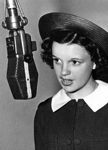



Bob Hope and Judy at the International Philatelic exhibition in Hollywood.
Bob and Judy are receiving an award over NBC Radio 1940.
Provided by Kim Loeffler - thanks again Kim!!!

|
JUDY GARLAND RECORDINGS |
Eight year old Judy sings "The Land of Let's Pretend"
in the 1930 film short Bubbles
Below are various MP3 files of Judy singing and bantering with other stars like Bing Crosby, Bob Hope & Frank Sinatra. Most are from radio "air check" recordings made during live radio shows. Due to the fact that the recordings were (at best) hastily recorded onto disc for shipment to the troops overseas (or just kept in the studio), the sound quality varies. Some were simply used as "air checks" for the network to test how their shows were sounding.
Clicking on each link will bring up a separate window for the recording. You may need to download Real Player(for PC) or iTunes
(for Mac). Or any other MP3 player/program you prefer.

This Vogue record is assumed to be from the 1940's.
Nothing else is known about it. If anyone has more information,
Please email me!
BE PATIENT - SOME FILES MAY TAKE A FEW MINUTES TO DOWNLOAD, DEPENDING ON YOUR CONNECTION SPEED
HIT YOUR BROWSER'S "BACK" BUTTON TO RETURN TO THIS PAGE.

| 10-26-1935 | BROADWAY
RHYTHM After Judy's appearance in the short subject Bubbles in 1930 (photo shown above), she doesn't re-appear via recordings (that are available - on 3/29/1935 she and her sisters had recorded a few Decca test singles that were never released and since have been lost), until this appearance on MGM's program "The Shell Chateau Hour with Wallace Beery." Judy had just signed her contract with MGM and is only 13 years old! This recording gives us a glimpse into the raw, unrefined talent that Judy was before that talent would be polished and trained at MGM throughout her years with the studio. We get the chance to see just what all of the excitement of "discovering Judy" was all about. Remember, no one else sang this way back in 1935 (Sophie Tucker & Ethel Merman come close by way of being "belters") - and certainly no 13 year old could come even close to the way Judy could sing with such power, richness, and emotion. Her talent is so obviously "God given." Judy would later sing "Broadway Rhythm" as part of the finale sequence in Presenting Lily Mars in 1943, |
| 11-16-1935 | ZING!
WENT THE STRINGS OF MY HEART Judy's return to the "Shell Chateau Hour." This time, Wallace Beery makes note that Judy has been signed by MGM - making it seem that she had been signed since her first appearance on the show (when in fact she singed with MGM almost months earlier). This performance is especially noteworthy in Judy's life - and we're lucky to have it. It's the earliest known recording of a song she would sing throughout her career (in varying arrangements) as well as being the song that she sang at her audition for MGM. However, most importantly, while Judy was giving this performance, on this night, her beloved father, Frank Gumm, was listening from his hospital room, having come down with spinal meningitis that day. Judy was aware of this, and her performance has an added intensity. Judy never saw her father alive again. He passed away later that night, but the family had put a radio in his room, and he was able to listen to his beloved "Baby" sing her heart out for her father one last time. In Judy's words: "The most terrible thing that ever happened to me in my life." |
| 08-06-1936 | AFTER
YOU'VE GONE ON REVIVAL DAY Again from the Shell Chateau Hour with Wallace Beery. This is the earliest known recording of Judy singing "After You've Gone" - a song which would become identified with her throughout her legendary "Concert Years" (1951 - 1969). Judy also performed a touching version in the film For Me And My Gal in 1942. "On Revival Day" is an interesting, little known song. |
| Aug/Sep 1936 | IT'S LOVE I'M AFTER This is the original pre-recording of the song. After signing with MGM, Judy appeared in the short "Every Sunday" with another teen singer named Deanna Durbin. The studio let Deanna go but kept Judy. Her first film assignment was on loanout to 20th Century-Fox for their film Pigskin Parade (1936). Judy's first appearance in a feature film. Judy played hick farm girl Sairy Dodd and although it was a small supporting role, she did get to sing three songs "The Texas Tornado," "The Balboa," and this song "It's Love I'm After." The reviews for the film would single Judy out and the film went on to be a big hit even garnering Stuart Erwin an Oscar nomination for Best Supporting Actor. Other stars of the film include Jack Haley and Betty Grable. In Betty's autobiography she remembered how, when Judy came on the set to sing her songs (to the playback of the pre-recording) everyone on the set just halted what they were doing and were transfixed. They were all in awe of her taltent, and according to Betty they all knew that THIS was a girl who was going places. Boy, were they right! |
| 04-06-1937 | SMILES From "Jack Oakie's College" - Judy was made a regular on Jack Oakie's show on 2/23/37. As a matter of fact, she previously performed "Smiles" on this show just a month prior, on March 9, 1937. She would record the song later for For Me And My Gal (1942) although only a snippet is heard in the film, the entire pre-recording can be heard on the Rhino CD Soundtrack for the film. |
| 04-14-1938 | COLLEGE
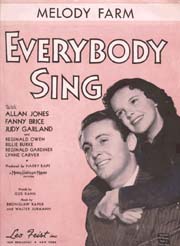
SWING CRYING FOR THE CAROLINES From "Good News of 1938." By this point, Judy was obviously a rising star, and had just completed the film Everybody Sing (1938) with Fanny Brice, Allan Jones, & Billie Burke. |
| 05-05-1938 | GOD'S
COUNTRY SERENADE From "Good News of 1938." Judy became a regular in the Good News series. "Gods Country" would reappear as a big production number a year later in Judy's first musical with Mickey Rooney: Babes In Arms (1939). |
| 03-07-1939 | IT
HAD TO BE YOU FDR JONES From "The Pepsodent Show Starring Bob Hope." Judy was a regular on the show. This is the only recording I know of Judy singing "It Had To Be You." Judy always had more opportunity via radio and her Decca contract to sing a much wider array of music - being able to stretch a little as a vocalist. This is her earliest recording of her popular "FDR Jones." Judy would sing it in "Babes On Broadway" quite effectively, and record the song for Decca Records as well. That version can be found on the Rhino CD set "Mickey & Judy/The Judy Garland Mickey Rooney collection (great 4 CD set of their 4 major musicals together) and the GREAT single Rhino CD: Judy Garland In Hollywood. (which I recommend to anyone with even a mild interest is Judy Garland). |
| 10-28-1940 | OUR
LOVE AFFAIR DRUMMER BOY With Mickey Rooney. From the "Lux Radio Theater" adaptation of Judy & Mickey's film Strike Up The Band. |
| 03-22-1943 | HOW
YA GONNA KEEP 'EM DOWN ON THE FARM? AFTER YOU'VE GONE From the "Screen Guild Players" radio show edition of For Me And My Gal. Judy also sang this in For Me And My Gal (1942) in a sequence where she is seen "performing for the troops." What's interesting to note in that sequence is how, even at this early stage, Judy's rapport with an audience (even if it's a set full of extras) and her legendary stage presence are already apparant. |
| 07-04-1943 | THIS
IS THE ARMY MR. JONES THAT OLD BLACK MAGIC From the "The Pause That Refreshes On The Air" radio show. "That Old Black Magic" has always been one of my favorite Judy songs. |
| 03-05-1944 | THE
MAN I LOVE EMBRACEABLE YOU From a "Command Performance" show (#81) with Bing Crosby. |
| 05-24-1944 | ZING!
WENT THE STRINGS OF MY HEART From an appearance on Frank Sinatra's Radio Show - this is a rare opportunity to hear Judy sing this song in her "mid 40's" voice. Her MGM and Decca (and early radio version available above) were full of youthful vigor, her later Capitol and Concert versions were with her more mature full voice. Here it's Judy the beautiful and talented young woman. |
| 06-04-1944 | THE
TROLLEY SONG THE WAY YOU LOOK TONIGHT From "The Bakers of America Salute to the Armed Forces" radio show. Judy also sang: "Long Ago & Far Away" |
| 01-03-1945 | LOVE From the "March Of Dimes" radio show. Judy also sang "I Wonder Who's Kissing Her Now." |
| 02-15-1945 | Judy does a parody of "Over The Rainbow" titled OVER A BARREL from the "Command Performance" radio show "musical" Dick Tracy in B Flat |
| 10-056-1945 | GOTTA
BE THIS OR THAT With Frank Sinatra from "The Danny Kaye Show" radio show. Judy also sang (with Frank) "How Deep Is the Ocean" & "My Romance." |
| 12-09-1945 | LOOK
FOR THE SILVER LINING THEY DIDN'T BELIEVE ME (partial, from the finale medley) from the "Jerome Kern Memorial Special." |
| 12-24-1945 | IT
CAME UPON A MIDNIGHT CLEAR From the "Command Performance" radio show |
| 10-06-1948 | FOR ME AND MY GAL EMBRACEABLE YOU WHO? CONFESS All 4 are duets with Bing Crosby from "The Bing Crosby Radio Show." |
| December 1948 | OVER
THE RAINBOW From "The Louella Parsons" radio show. Exact date unknown - this is a rare instance of Judy singing the opening verse of the song. |
| 1949 | ALL THROUGH THE DAY Rehearsal recording with Gene Kelly. Exact day is unknown. |
| 10-11-1950 | GOODNIGHT
IRENE (parody) From "The Bing Crosby Show" radio show. Judy also sings "Sam's Song" & "Get Happy." |
| 12-05-1950 | RUDOLPH
THE RED NOSED REINDEER (with Bing Crosby): From "The Bing Crosby Show" radio show. This is the show which also contains Judy's first public performance of "Rock-a-Bye Your Baby with a Dixie Melody" - which would later become identified with her. It was sung in tribute to Al Jolson - he passed away on October 23, 1950. Judy also sang "Boise, Idaho," "Blue Boy" & "These Lush Moments" (all with Bing Crosby). Judy and Bing had a wonderful rapport that, sadly, they were never able to showcase in a film together. On the radio, their personalities, not to mention their voices, blended perfectly. So much so that when Bing's wife passed away, Judy became Bing's permanent guest host for the show. Luckily, Judy and Bing DID record a few singles for Decca Records in 1945 (they both were under contract to the company) which give us lucky listeners more chances to hear their marvelous chemistry. |
| 01-30-1951 | I'M
IN LOVE WITH A WONDERFUL GUY From "The Bob Hope Chesterfield Show" radio show. Judy rarely sang Rodgers & Hammerstein's songs - this is a rare example of how she would have put her distinctive style on one of their songs. At this time, Judy was rumored to have been a possible replacement for Mary Martin in the show "South Pacific" (in which this song is from), but supposedly the producers decided against it, fearing Judy wouldn't be able to handle the grueling 8 shows a week (plus) schedule. |
| 05-21-1952 | SOUND
OFF FOR CHESTERFIELD WHEN YOU WORE A TULIP WHEN YOU'RE SMILING MEAN TO ME From "The Bing Crosby Show" radio show. All are duets with Bing. "When You Wore A Tulip" was one of her big hits for Decca Records back in 1942 as a duet with Gene Kelly (they sang it in the film For Me And My Gal that same year.) "When You're Smiling" is much different than her later concert renditions - this version is closer to how the song was originally written. "Mean To Me" was recorded by Judy in 1957 for her "Alone" album for Capitol Records. "Sound Off For Chesterfield is Judy and Bing and announcer Ken Carpenter in a sponsor's message for the cigarette company. Things sure have changed since then when singers would promote smoking!! |
| 06-04-1952 | YOU
MADE ME LOVE YOU From "The Bing Crosby Show" radio show. Judy also sings "Hello Ma Baby," "In My Merry Oldsmobile," "Walkin' My Baby Back Home" & "You're Just in Love" (all with Bing Crosby - and "Over the Rainbow." This version of "You Made Me Love You" is a rare instance of Judy singing the complete, "adult" version of the song. One of my personal favorites. |
| APRIL 1967 | I'LL PLANT MY OWN TREE Pre-recording to what would have been Judy's final film Valley Of The Dolls (1967). Luckily, Judy did not make the film but she did pre-record this song (ultimately "performed" by Susan Hayward to a different pre-recording) and she also made some costume tests (footage of which survives) and began filming with Patty Duke (in a role based on the young Judy Garland - only stills are known to survive). Thankfully this did not become Judy's final film as it ended up being one of the worst, campiest films ever made on a "big budget" (but still fun to watch!). Judy kept the famous beaded pantsuit she's first seen wearing in the costume tests (and would wear throughout the end of her life, most notably at her final Palace appearance in 1967). This is the last song Judy ever recorded for a film. |
[ Timeline Index ]
[ 1922-1939 ] [ 1940-1945 ] [ 1946-1950 ] [ 1951-1960 ] [ 1961-1965 ] [ 1965-1969 ]
[ Decca Songs ] [ MGM Songs ] [ Capitol Recordings ]
Home | The Judy Room | Garland Timelines | Meet Me In St. Louis | MP3 Files | Essential Garland
Send Judy Postcards | Photo Gallery | Judy in the 60's | Judy's Poetry | Judy Links
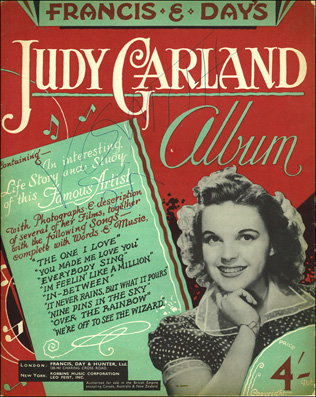
FRONT OF AUSTRALIAN CIRCA 1940 "SONG FOLIO" OF SHEET MUSIC TO ALL OF JUDY'S EARLY MGM HITS
"On The Bumpy Road To Love" sheet music courtesy of the collection of Kim Loeffler.
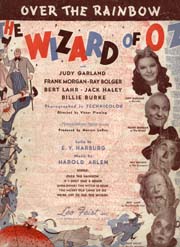
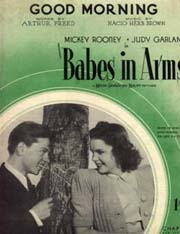
"Good Morning" sheet music courtesy of the collection of Kim Loeffler. All other sheet from my personal collection.


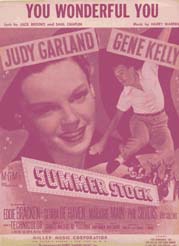
Original sheet music from my personal collection

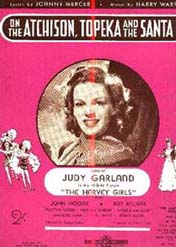
Original sheet music to Judy's Decca single "There Is No Breeze," and the Australian sheet music for Judy's hit "On The Atchison, Topeka And The Santa Fe" courtesy of Kim Loeffler. Thanks Kim!
CLICK ON ICONS TO SEARCH FOR AND PURCHASE JUDY PRODUCTS
Visit THE JUDY GARLAND DATABASE - the BEST online resource for everything about Judy Garland